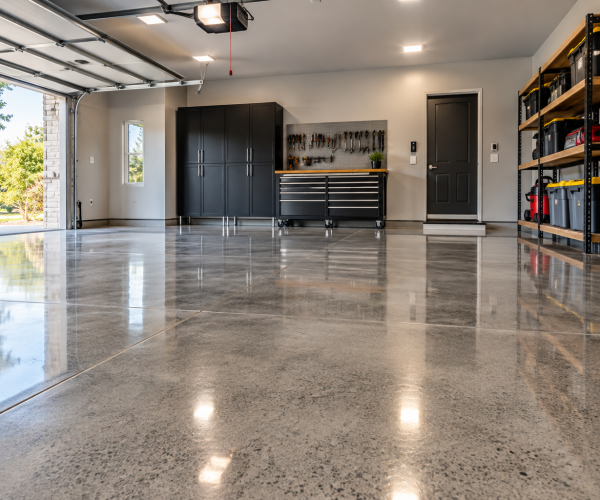
Cleaning and Maintaining Polished Concrete in Austin
A polished concrete floor needs a dust mop and a pH-neutral cleaner. That’s most of it. There’s no waxing, no stripping and no resealing schedule, because the finish comes from the density of the concrete rather than from anything sitting on top.
Request A FREE Quote
That’s worth saying plainly, because a lot of floor maintenance advice online is written by people selling a product to apply. Polished concrete doesn’t take one. If someone quotes you for an annual reseal on a mechanically polished slab, ask what they’re sealing. If you’re not sure what you’ve got, send us a photo of the floor and we’ll tell you which it is before anyone quotes anything.
What the floor does need is protection from grit. Sand and dust dragged across a polished surface act like fine sandpaper, and over years that’s what dulls it rather than any single spill or scuff. Sweeping regularly does more for a polished floor than anything you could pour on it.
Eventually the sheen softens along the routes people actually walk, while the rest of the floor still looks new. That’s when we’re worth calling, and the fix is burnishing rather than starting again, which is a single visit rather than a project.

How to look after a polished floor
Day to day, dust mop it. A microfibre mop picks up the grit that does the damage before it gets walked into the surface. On a garage floor a stiff brush and a shop vac work just as well, and are easier to store. The frequency depends on what comes in on shoes and tyres rather than on the calendar, so a house with a dog and a gravel drive needs it more often than an office does.
For wet cleaning, use a pH-neutral cleaner and a damp mop. On a commercial floor an auto-scrubber with a soft pad is faster and does a better job than mopping. Change the water before it turns grey, because dirty water just redistributes the grit.
What to avoid matters more than what to use. Anything strongly acidic will etch the surface, and that includes vinegar, which turns up in a lot of homemade floor recipes. Strongly alkaline cleaners and bleach dull the finish over time. Wax and acrylic sealers are worse again, because they put a film on a floor specifically designed not to have one, and taking it back off means grinding.
Spills come up with water and a neutral cleaner if you get to them reasonably promptly. Oil is the exception, and on a garage floor it’s worth dealing with the same day rather than the same week, because the longer it sits the further it travels into the concrete.
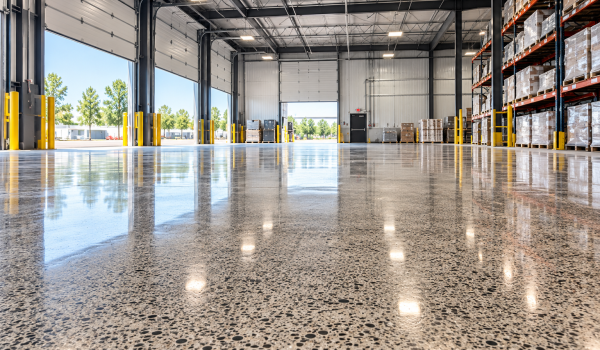
Burnishing is what restores the sheen. A high-speed machine with a fine pad brings the surface back in a single visit without regrinding the slab, so it’s a maintenance call rather than a project. Most residential floors go years between burnishes. A busy commercial floor might want one annually, and a warehouse with forklift traffic more often than that.
Restoration is the bigger version, for a floor that’s been neglected, damaged, or covered with something it shouldn’t have been. That means going back to the grinder for the affected areas and re-densifying, then rebuilding the finish through the grit stages. It’s less common than people expect, and we’ll tell you if that’s what your floor actually needs rather than defaulting to it.
Re-sealing is not a maintenance item on a polished floor. A penetrating sealer soaks into the concrete rather than forming a layer, so there’s nothing to wear off. If yours was coated rather than polished, that’s a different floor with different rules.

Why owners call us
We polish, so we know what’s underneath your floor and what it will take. A cleaning company can make a polished slab look better for a fortnight. Bringing the sheen back is a different job with different equipment, and knowing which one your floor needs is most of the value in the visit.
We’ll tell you when a floor doesn’t need us. Plenty of the floors we look at need a proper clean and a change of routine rather than a burnish, and saying so costs us a booking and earns the next one. Maintenance work is repeat work, and there’s no version of this where overselling the first visit pays off.
We don’t apply coatings, waxes or topical sealers to polished floors, and we’ll advise against anyone who wants to. It’s the fastest way to turn a low-maintenance floor into a high-maintenance one, and undoing it later costs more than the original polish did.
Most of our maintenance work comes from floors we polished ourselves, which means we already know the slab, the finish level and what it was like underneath. If we didn’t do the original floor that’s fine, we’ll just spend longer working out what we’re looking at.
Established 2012, with more than 1,000 completed floors behind us. Fully insured. We hold no certifications we can’t show you and name no trade bodies we don’t belong to.
Maintenance across Central Texas
Austin conditions are hard on a polished floor in one specific way. Dust. A lot of driveways and yards here are unsealed or gravel-edged, and what gets tracked in is abrasive. It’s the main reason floors here dull along entry routes faster than the finish itself would suggest.
That’s a housekeeping problem more than a flooring one. Mats at both doors and a regular sweep will extend the interval between burnishes further than any product on the market will, and they cost a great deal less.
The other local factor is seasonal. Wet months bring in more grit than dry ones, and a floor that gets a light sweep twice a week through spring will look better come August than one that gets a single heavy clean once a month.
Maintenance calls are short, so we group them by area where we can. That means a visit to Round Rock usually comes with a Cedar Park callout the same day, and it’s worth asking when we’re next in your direction rather than assuming a single floor isn’t worth the trip.
We cover the same area for maintenance as for polishing. Austin and the central neighborhoods, west toward Lakeway, then Leander, Georgetown, Pflugerville and Hutto.

Frequently asked questions
How do I clean polished concrete floors?
Dust mop for grit and a pH-neutral cleaner with a damp mop for anything wet. That’s genuinely the whole routine. On a commercial floor an auto-scrubber with a soft pad is faster. Change the water before it goes grey, because dirty water spreads grit rather than lifting it. Avoid vinegar, bleach and anything strongly alkaline, all of which dull the finish over time.
Does polished concrete need resealing?
No. A penetrating sealer soaks into the concrete rather than forming a film on the surface, so there’s nothing there to wear off and nothing to reapply. If a contractor is quoting you for an annual reseal on a mechanically polished floor, ask what exactly they’re sealing. Coated floors are different, and they do need renewing, which is one of the reasons we don’t coat.
How often does a floor need burnishing?
It depends entirely on traffic. Most residential floors go several years between burnishes and some never need one. A busy retail or restaurant floor might want it annually. A warehouse with forklift traffic more often. The honest answer is that you’ll see it before you’re due, because the sheen softens along the walking routes first while the rest of the floor still looks new.
What is the difference between burnishing and restoration?
Burnishing is a high-speed pass with a fine pad that brings the sheen back in a single visit, without touching the slab. Restoration means going back to the grinder for areas that have been damaged, neglected or coated with something, then re-densifying. Burnishing is a maintenance call. Restoration is a project, and it is far less commonly needed than people assume.
Can you fix a floor that has been waxed or sealed?
Usually. Wax and acrylic sealers sit on top of a polished floor, and taking them off means grinding back to the concrete and rebuilding the finish. It’s more work than the original polish in some cases. It’s also why we advise against putting anything on a polished slab, however good the product claims to be.
Do you clean polished concrete, or only maintain it?
Both, though the two get confused. A cleaning visit deals with dirt. A maintenance visit deals with the finish, which usually means burnishing. Most floors that look tired need the first rather than the second, and we’d rather tell you that than sell you the more expensive one. Tell us what the floor looks like and we’ll say which it is.
Book a maintenance visit
Based in Austin, Texas. Open Monday to Friday, 7:00 AM to 6:00 PM.
Call (512) 900-5938 or send a photo of the floor and we’ll tell you what it needs.