Polished Concrete Lakeway, TX
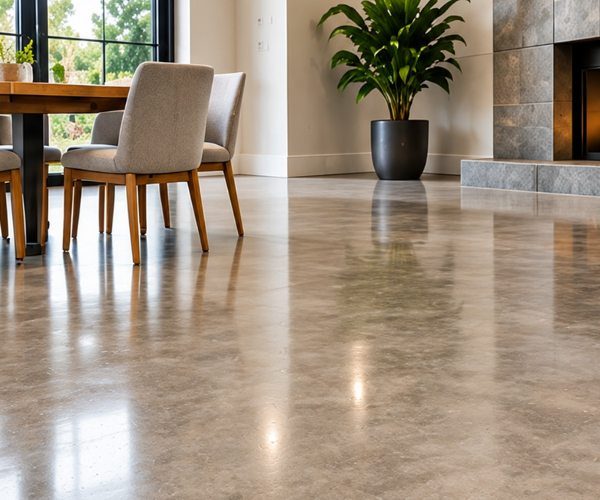
Polished concrete in Lakeway starts with the slab already in your house, refined through diamond grit stages into the finished floor. Nothing is applied over the top. We polish whole floors, garages and covered patios across the Lake Travis area.
Request A FREE Quote
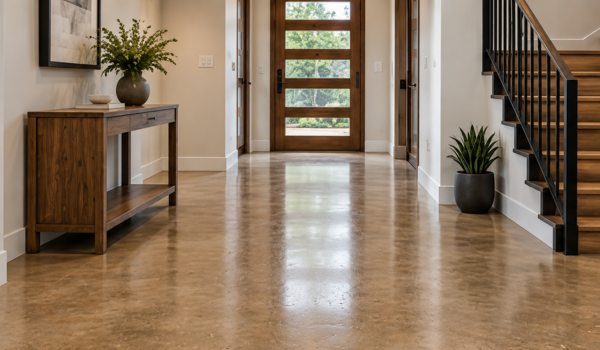
Whole-house work is most of what we do out here. Living areas, kitchens, hallways, plus the covered patios that Hill Country houses are built around. We look at the floor before quoting anything, at no charge.
The condition of the slab and whatever’s been put on it decide the timeline far more than the square footage does. Nobody can price a Lakeway floor accurately from a phone call, because what matters is under the carpet rather than measurable from the doorway with a tape.
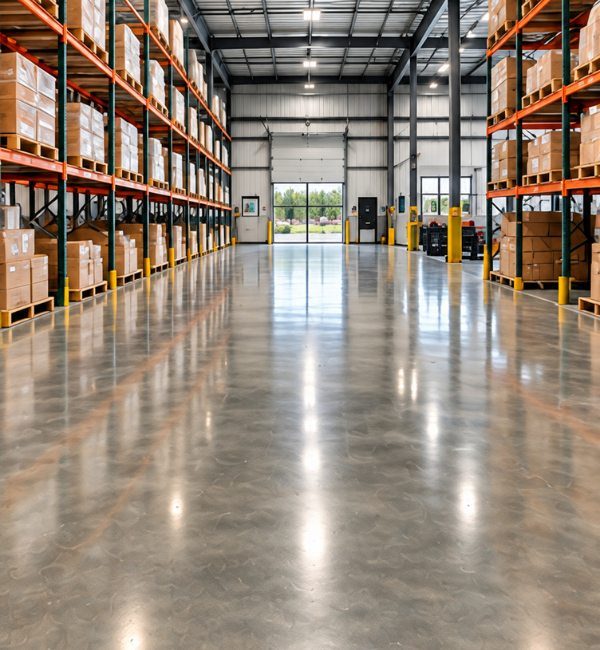
Garages are the other half of the work, and they come with their own problem. A Hill Country garage takes a beating, and a coated garage floor tends to give up at the door edge where the sun hits it hardest.
What we don’t do is hide the slab. A polished floor shows what’s underneath, including old patches and previous repairs, so we’d rather tell you what will come out and what won’t before we start.
What we find on Lakeway slabs
Lakeway is in Travis County rather than Williamson, and it’s a different proposition from the northern suburbs entirely.
The city started in 1963 as a second-home development on the south shore of Lake Travis and incorporated in 1974. That history shows up in the slabs. Apache Shores and Hudson Bend carry mid-century lake-house stock, much of it built as weekend cabins and converted to full-time homes as Austin grew west. Those slabs have usually been altered more than once, and polishing reveals every seam rather than covering it.
The Hills of Lakeway, Flintrock Falls and The Preserve at Lakeway are newer and behave differently. Those are master-planned builds on prepared sites, and the slabs are flatter and more consistent. They grind predictably.
Two things are specific to this area. The first is terrain. Hill Country sites are cut into slope, so garages sit at odd levels and slabs often fall harder toward the door than they would on flat ground. That changes the finish we recommend, because a floor that drains has to stay safe wet.
The second is limestone dust. The ground here is limestone, and what gets tracked in on tyres and shoes from unsealed drives is abrasive. It dulls a polished floor along entry routes faster than anything else, which is why we suggest matte or satin where a floor gets used hard.
How the work runs
Assessment. We check hardness, flatness, cracking, coating history and whether there’s damp rising through the concrete. In an older Lakeway house it’s usually what’s been laid over the slab across three or four decades that decides how much of the timeline goes on preparation rather than polishing.
That’s the part of a quote most likely to move once we’ve seen the floor. A slab that’s carried carpet, then tile, then a coating isn’t the same job as one bare since it was poured.
Preparation. Old coatings, paint, adhesive and sealer come off mechanically rather than with solvents. Cracks and spalled areas are filled with color-matched material so they read as part of the floor rather than as obvious repairs. Where a slab falls toward a door, we check the fall before agreeing a finish level.
Grinding. Coarse diamond tooling opens the surface and flattens high spots. This is the dusty stage and we run vacuum extraction throughout, sealing off rooms we aren’t working in so the rest of the house stays usable.
What we watch for is how evenly the slab opens. On a converted lake house it rarely opens evenly. A room addition or an enclosed porch usually means a second pour, and concrete laid decades apart doesn’t grind the same. That’s the single most common surprise on an older Lakeway floor.
Densifying. Lithium densifier reacts with free lime inside the concrete and hardens the slab from within. That’s what makes the floor abrasion resistant rather than merely smooth, and in a garage it’s also what resists hot tyre marking.
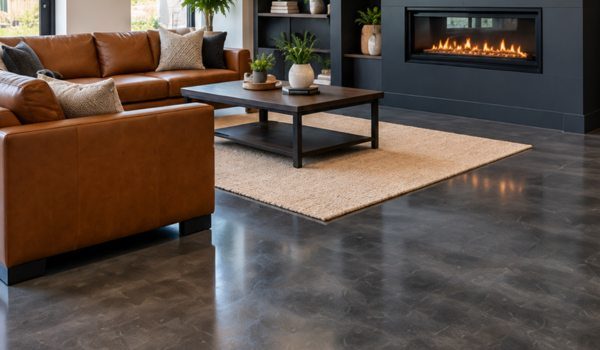
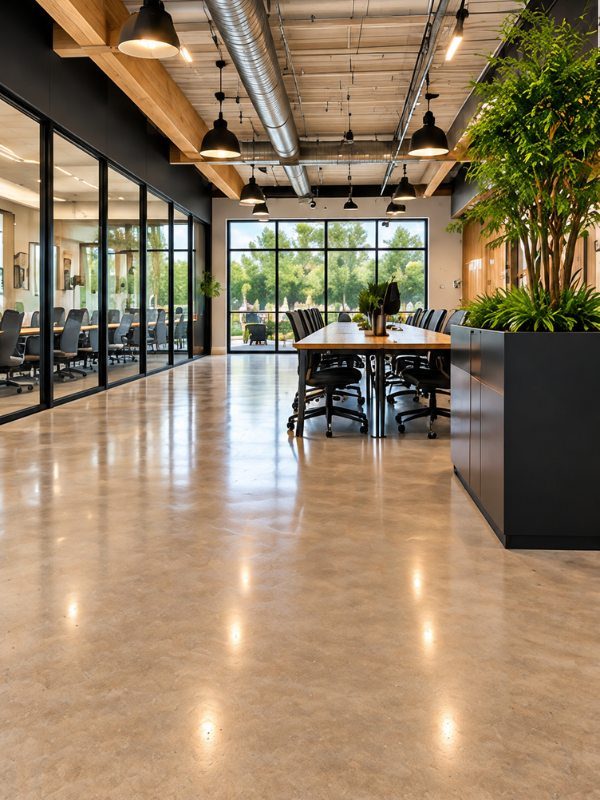
Polishing. Progressively finer grit stages take the surface to the sheen you chose. Matte hides dust and suits working spaces. Satin sits in the middle and works through most of a house. High gloss carries light across an open room, which suits a Hill Country floor plan built around views, and shows every footprint with it.
Sealing. A penetrating sealer guards against oil and water staining. It soaks into the concrete rather than sitting on top, so there’s nothing on the surface to peel when the slab expands in August. Anti-slip treatment is available where a floor slopes or gets wet.
Grinding depth is a separate decision from sheen. Stop shallow for a cream finish, or go deeper and the aggregate appears. How far we can go depends on what sits near the surface of your slab, so we bring samples rather than photographs.
A single garage runs one to two days. A whole ground floor takes longer, and we’ll give you a realistic window rather than an optimistic one.
Why Lakeway homeowners work with us
We only polish. Not coatings, not overlays, not staining. On an older lake house that matters, because the slab has usually been through more than one owner and more than one idea about what should go on top of it.
We assess before we quote, and estimates are free. Nobody prices a floor accurately over the phone, because the slab’s condition decides the timeline more than the area does.
We’re straight about what will come out. Oil that’s sat in a slab for years sometimes stays visible after polishing, and grinding doesn’t change that. You’ll hear it at the assessment rather than three days in.
Lakeway is about twenty-five miles west of us, so we schedule work out here in blocks. It’s worth asking when we’re next heading that way rather than assuming a smaller floor isn’t worth the trip.
An open-plan Hill Country house is the hardest floor to promise a result on, because the slab runs continuously through rooms built at different times. We’d rather work that out at the assessment than have you discover it on day two.
Established 2012, with more than 1,000 completed projects across Central Texas. Fully insured. We hold no certifications we can’t show you and name no trade bodies we don’t belong to.
Frequently asked questions
How much does polished concrete cost in Lakeway?
The biggest variable here is whether the house is original or converted. A single-pour slab in one of the newer developments prices predictably. A lake house that has been extended twice since the seventies takes longer, because the grind is uneven and the preparation is less predictable. Estimates are free and include someone walking the floor before any number is given.
Do you polish natural stone floors?
No. We polish concrete, and only concrete. Stone floors are a different material with a different process and different equipment, and we’d rather say so plainly than take on work we aren’t set up for. Plenty of Lake Travis homes have stone rather than concrete underfoot, and if yours does, we’re not the right call for it.
Will a polished floor work across a whole ground floor?
Usually, and it’s the most common thing we’re asked to do here. The advantage is continuity: no thresholds between rooms, no grout lines, one surface running through. What to check first is whether the slab is a single pour. Where a house has been extended, the aggregate can shift across a room, so see samples before committing.
My garage slopes toward the door. Does that matter?
It matters for the finish rather than for whether we can polish it. Hill Country sites are cut into slope, so garages here often fall harder toward the door than they would on flat ground. A high gloss surface gets slippery when it’s wet, so on a sloping floor we’d usually recommend matte or satin with an anti-slip treatment.
Can you polish an older lake house slab?
Usually, and age matters less than condition. What we check for is moisture moving up through the concrete, spalling, and how tightly the surface was troweled. Older properties here have often been extended or converted, which means more than one pour, and that changes what we can promise about a uniform finish across a room.
How do I keep it clean?
A dust mop for grit and a pH-neutral cleaner with a damp mop for anything wet. Limestone dust off the drives here is abrasive, so regular sweeping matters more than it would elsewhere in the metro. No waxing, no stripping and no resealing schedule, because there’s no coating on the surface to renew or wear through.
Book a free estimate
Based in Austin, Texas, working throughout Lakeway and the Lake Travis area. Open Monday to Friday, 7:00 AM to 6:00 PM.
Call (512) 900-5938 or request an estimate and we’ll arrange a time to look at the floor.