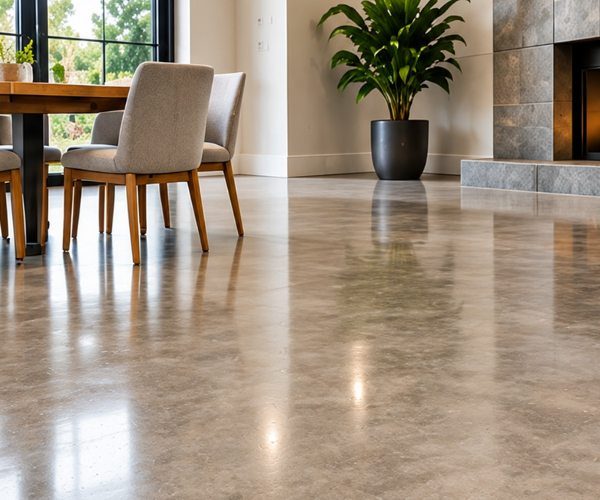
Polished Concrete Bee Cave, TX
Polished concrete in Bee Cave is the slab already in your building, run through diamond grit stages then hardened with a densifier. Nothing’s applied over the top of it, so nothing can fail separately later.
Request A FREE Quote
There’s no coating to renew, which matters more on a commercial floor than a domestic one, because the recoating cycle is what makes a coated floor expensive across a lease term. Someone looks at the floor before we quote, and that visit is free.
Bee Cave is a small city with a large commercial core, so the work here splits differently from anywhere else we cover. Retail units, restaurants, offices around the Galleria on one side. On the other, custom homes plus the newer developments.
That mix is unusual enough for a city this size that we treat the two as separate conversations rather than one service with two prices.
On a retail unit we’re reading the coating history and your trading hours. In a house it’s the slab condition and whatever the last flooring left behind.
What polishing doesn’t do is hide the slab. It shows what’s underneath, so we’ll tell you what comes out and what stays before the work starts rather than halfway through it.
What we find on Bee Cave slabs
Bee Cave sits in western Travis County, about fifteen miles west of downtown Austin, at the junction of Highway 71 and RM 620. It’s Hill Country terrain, so sites are cut into slope and the ground beneath is limestone rather than the clay further east.
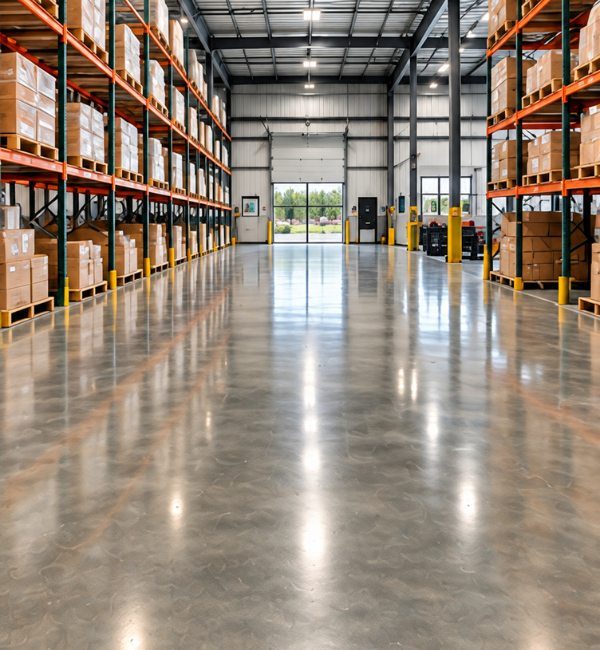
The commercial picture is unusual for a city this size. The Hill Country Galleria carries around 713,000 square feet of retail and 285,000 of Class A office space, in a city of roughly 9,000 residents. Those are large, flat pours laid to commercial tolerances, and they’re good polishing candidates. The variable is coating history, because a unit that has turned over two or three tenancies usually carries more than one generation of flooring.
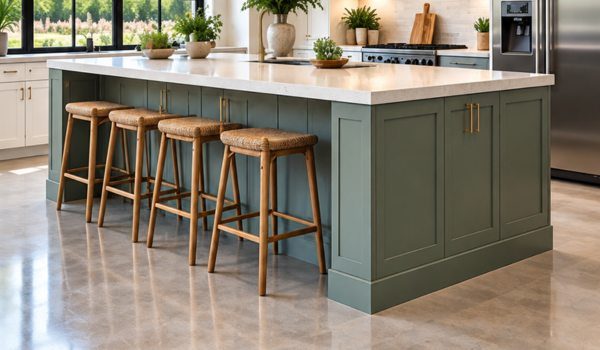
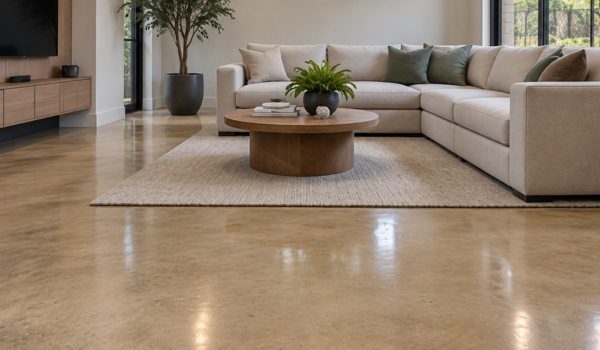
Residential Bee Cave is the opposite scale and mostly recent. The city only incorporated in 1987 and grew from a few hundred residents on the back of Falconhead, Falconhead West and the newer developments. Those slabs went down to a modern spec on prepared sites, so they open evenly and quote predictably.
Two things apply to both. Hill Country sites fall harder toward doors than flat ground does, which changes the finish we’d recommend where a floor drains. And limestone dust off unsealed drives and parking areas is abrasive, so it’s the main thing that dulls a polished surface along entry routes here.
How the work runs
Assessment. We check hardness, flatness, cracking, coating history and whether moisture’s moving up through the slab. On a Galleria unit the coating history usually decides the timeline. In a newer house it’s a shorter conversation.
That’s also the part of a quote most likely to shift once we’ve seen the floor, which is why we won’t price a retail unit from a plan.
Preparation. Old coatings, adhesive, line-marking paint and tile thinset come off mechanically rather than with solvents. Cracks and spalled areas are filled with color-matched material so they read as part of the floor rather than as obvious repairs. Control joints get filled where a floor carries trolley or vehicle traffic, because an unfilled joint edge chips under hard wheels.
Grinding. Coarse diamond tooling opens the surface and flattens high spots. This is the dusty stage and we run vacuum extraction throughout. In a retail unit it’s also where we work out how the space gets sectioned so you can keep trading around us.
Densifying. Lithium densifier reacts with free lime inside the concrete and hardens the slab from within. That’s what makes the floor abrasion resistant rather than merely smooth, and on a shop floor taking constant footfall it matters more than the sheen does.
Polishing. Progressively finer grit stages take the surface to the sheen you specify. Matte suits back-of-house and workshop space. Satin sits in the middle and works in most homes and offices. Gloss carries light through a retail space and shows every mark with it.
Grinding depth is a separate decision from sheen. Stop shallow for a cream finish with little stone showing, or go deeper and the aggregate appears, up to a fully exposed stone surface. We bring samples rather than photographs, because nobody chooses a floor accurately from a screen.
Sealing. A penetrating sealer guards against oil and water staining. It soaks into the concrete rather than sitting on top, so there’s nothing on the surface to wear through where the traffic concentrates, and nothing to reapply on a schedule.
Most residential jobs run a few days from first grind to final seal. A retail unit depends on how much can be sectioned off at once, and we’d rather give you a realistic window than an optimistic one.
Anti-slip treatment is available where a floor slopes or gets wet, which on a Hill Country site is worth raising at the assessment rather than afterwards.
Why Bee Cave clients work with us
We only polish. Not coatings, not overlays, not staining. On a commercial floor that narrowness shows up in the estimate, because whoever quotes your slab has ground several hundred of them rather than a handful between other trades.
We assess before we quote, and estimates are free. Nobody prices a floor accurately from a square-footage figure, because the coating history and the state of the joints decide the work.
We coordinate with trading hours. On a retail or office fit-out that usually means sectioning the floor and working in phases rather than closing the space, and it’s worth agreeing which areas can be released before anything starts.
We’re straight about limitations too. Some slabs won’t give you the finish you had in mind, and you’ll hear that at the assessment rather than after the grinders have run and the unit is already closed.
Bee Cave is about twenty miles west of us and we’re out that way regularly, so scheduling rarely holds a job up. It’s worth asking when we’re next over.
Polishing Central Texas floors since 2012, with over 1,000 completed. Fully insured. We hold no certifications we can’t show you and name no trade bodies we don’t belong to.
Frequently asked questions
How much does polished concrete in Bee Cave cost?
On a commercial floor the coating history sets the price, because stripping two tenancies’ worth of flooring takes far longer than polishing a bare slab. On a newer house in Falconhead or one of the surrounding developments there’s usually little to remove, so more of the job is polishing. Estimates are free and start with someone walking the floor.
How long will a unit be out of use?
Less time than most people budget for, and often none at all. Galleria units tend to have clear sightlines and few internal walls, which makes sectioning straightforward. We’ve worked around trading hours more often than we’ve closed a space. The honest answer depends on your layout, so ask at the assessment.
Does the Hill Country terrain affect the floor?
Mostly at the doors and loading areas. Sites here are cut into slope, so a slab often falls harder toward an opening than it would on level ground. That’s fine for drainage and awkward for finish choice, because a high gloss surface becomes slippery wet. On those areas we’d specify satin with an anti-slip treatment.
Why does my floor dull faster near the entrance?
Limestone dust. The ground here is limestone and what gets carried in on shoes and tyres from unsealed drives and parking areas is abrasive. It works like fine sandpaper along the routes people actually walk. Regular sweeping at entry points does more for a polished floor here than anything you could pour on it.
Do you take on smaller residential jobs?
Yes. Bee Cave is a small city and a lot of the work is single rooms, kitchens or garages rather than whole floors. A smaller job is worth scheduling because we’re out this way regularly, so it doesn’t sit waiting weeks for a slot. Ask when we’re next in the area.
Is polished concrete suitable for a restaurant?
It can be, and the requirements are worth checking before specifying anything. Food preparation areas have rules about smooth, durable, non-absorbent flooring that a sealed polished slab can meet. Drainage falls and slip resistance in wet areas need designing in rather than assumed, so tell us how the space gets used.
Book a free estimate
Based in Austin, Texas, working throughout Bee Cave and western Travis County. Open Monday to Friday, 7:00 AM to 6:00 PM.
Call (512) 900-5938 or request an estimate and we’ll arrange a time to walk the floor with you.